Showing posts with label community. Show all posts

Friday, February 22, 2013

4-H Chick Sale in San Jose

Passing along this Chick Sale announcement from the 4-H here in Silicon Valley. As I'm watching the usual online sources for mail-order chicks, it seems we're going into yet another high-demand spring for chickens in the backyard. Glad to see the 4-H kids helping to increase the population of urban chickens here in the Bay Area.

Have another 4-H chick sale you want to promote? Share your details in the comments below.

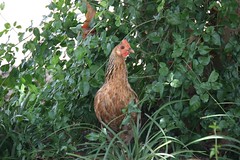
Flickr photo by ccarlstead
When?
Saturday, March 9th
Saturday, April 27th
from 10am to 11:30am

Where?
Sam's Downtown Feed and Pet Supply Store
759 W San Carlos, San Jose

What breeds?
  • Buff Orpingtons
  • Rhode Island Reds
  • Americaunas
  • Golden-Laced Wyandottes
  • Black Austrolorps
  • Light Brahmas (March only)
  • White Leghorns (April only)
How much?
$5.00 per chick

To reserve chicks, you may contact us at 4hpoultryproject [at] gmail [dot] com. Pre-order forms also can be found at Sam's Feed. We strongly recommend doing so--they go pretty fast on sale day! The deadline for forms is Feb. 28th.

The chicks will be ten days old at the sale date. They are sexed at the hatchery and vaccinated for Merek's disease.

Any questions? 4hpoultryproject [at] gmail [dot] com

Thanks for supporting 4-H!

Friday, April 22, 2011

Happy Earth Day 2011

One of the things I most love about celebrating this Earth Day is recognizing just how pervasive the idea of urban chickens has become over the last four years that I've been paying attention.

Back in 2007, outside of the stellar (yet nascent) community over on BackyardChickens.com, there was very little information online about raising micro-flocks of chickens anywhere off  agriculturally-zoned land. This blog was founded as a way to document my own entry into this fascinating world of keeping chickens in your own backyard. How do you pick a chicken? Where do you get a coop? What do they eat? When do the eggs start coming? What to do with all these eggs? Why can't I have chickens? What do I do with a sick hen? So many questions and answers and there's a lot yet to be learned.

The blog then morphed into something bigger as I found new friends who shared my interest in urban chickens and we're almost 5000 friends strong over on the Facebook page. Today, this blog is just one of literally thousands of blogs talking about the joy that is urban chicken keeping. In my work these days, I get a chance to travel to Portland (Oregon) quite frequently and I'm still tickled to spot coops in backyards and hear clucks behind fences as I walk through the various neighborhoods.

I hope you get a chance to celebrate Earth Day with your hens, and if you're in between hens (as I am right now), here's hoping you know someone just down the block who's willing to share their flock.

Happy Earth Day!

Wednesday, February 2, 2011

How to give away an unwanted urban chicken, part 1

Wow, we had some great comments on last month's post about what to do when chickens no longer lay eggs both here on the blog and on the Urban Chickens Facebook page. Given the choice between processing a hen and giving her away, the vast majority of respondents recommended finding a new home for the chook.
Chicken
Chicken by Flickr user pjah73


But how, exactly, do you go about making sure your hen (or roo) finds a good new home? Here's where we urban chicken farmers can take a page from successful pet adoption techniques that have seen many dogs and cats find new homes.

How to look for a new owner for your chicken:
  1. Reach out to other responsible chicken owners. This is your best bet to make sure your chook winds up in a good new home: going to someone who's already familiar with keeping chickens. No matter where you live, you can be sure there's someone else keeping chickens nearby. Look for Yahoo! groups or Meetups or even 4-H clubs -- more info on finding urban chicken farmers near you.
  2. Advertise where other pets are being put up for adoption. This is a double-edged sword of a recommendation, as both well- and ill-intentioned folks look in the same place for animals to acquire. Give the ubiquity of Craigslist, that's a good place to start. While the sale of pets is prohibited on Craigslist, you can list your chicken to be re-homed along with a small adoption fee.
  3. Make your chicken attractive, but remember to be honest. Include a picture of your chook in your listing, and talk up her good qualities, but don't forget to responsibly share your chicken's shortcomings (especially if "she" is a "he" and you're trying to re-home a rooster!). Has your hen shown dominant behavior in your flock? Is she an inconsistent layer? Is she broody? You'll want to be sure the new owner has a heads up on anything that might be quirky about their new edition. The last thing you want to do is frustrate the new owner with surprises before they've had a chance to bond.
  4. Never advertise your chicken for free. Animal welfare groups warn that "free pet" ads attract unscrupulous folks, and I think it's safe to say those who'd be interested in sourcing new roos for cockfighting fall in this category. By charging even a small stipend to change hands, you're helping keep the ne'er-do-wells at bay.
With these tips, you now know where to look for a new owner. In my next post, I'll talk about how you can best screen those who are interested in providing a new home for your chicken.

If you have other tips for this list or for the next post on how to screen, please leave them in the comments below!

    Monday, August 9, 2010

    Eggstravaganza: The Art of Living with Chickens

    I'm accustomed to coop tours and chicken talks happening in the spring and summer months, so it's a bit of a surprise to discover that there's a coop tour appearing on the calendar just before Halloween this year in McClellanville, SC.

    The McClellanville Arts Council ("Where everyone is an Artist") is holding the Eggstravaganza: The Art of Living with Chickens on Saturday, October 30, 2010.

    The day-long schedule includes the following activities:
    • a morning panel discussion on raising poultry and a craft workshop: Chicken Art with Chicken Parts
    • An afternoon Tour da Coops, a self-guided tour of local chicken coops and poultry sites.
    • And things wind up with a photograph exhibit featuring local poultry and coops and a raffle of a hand-crafted coop/tractor in the shape of a chicken. 
    People will be able to vote on their favorite poultry and coops and there will be door prizes throughout the day from local businesses.
    If only I lived on the East Coast, I know where I'd be spending the day before Halloween. I look forward to hearing the recap from the event and you can rest assured I'll be posting it here.

    Anyone know of any other Fall/Winter coop tours or chicken talks? Let me know and I'll add them to the list.

    Thursday, April 29, 2010

    Animal Sanctuary Coalition Hoodwinks Mankato City Council

    I've blogged about the urban chicken goings-on in Mankato, Minnesota before because it's such a rich source of perplexity regarding the evolution of anti-chicken laws, the hysterical anti-chicken sentiment and the schizophrenic actions of the City Council. The Council rejected an ordinance last year that would allow urban chickens to return to the city for the first time since 1949.

    Lucky for wannabe urban chicken keepers, the Mankato City Council has decided to give the chicken issue another look in 2010! Good, right? Read on...

    Unluckily for wannabe urban chicken keepers, the council is referring to a staff report that contains more hysterical fiction than fact. From Dan Linehan's article in the Free Press:
    A staff report on this issue brings up some predictable negatives like smell, proper care and protection from predators.

    It also says between 20 percent to 50 percent of chicks sold as hens turn out to be roosters.

    “These unwanted roosters are often given to animal shelters, released into the streets, and, in a growing number of cases, sold for cockfighting,” the report says.

    Companies that sell chicks typically ground up the newborn roosters for feed or fertilizer, according to the report. 
    Wait a minute! We've seen these scary (and still unsubstantiated) facts before somewhere, haven't we?

    Oh yeah, it's the same crap that Animal Sanctuary Coalition who blasted their outlandish Position Statement on Backyard Chickens last December. And it would appear this coalition has managed to brainwash the Mankato staff with a single sensational press release. It smacks of laziness on the city staff's part that they'd take the claims lock, stock and barrel. Yet, the council is able to say (with a straight face) it's "open to revisiting the issue" even though they'd get better inputs from perusing the menu at the local KFC. (or Church's or Popeye's or whatever fries up the chicken parts near you).

    I'd love to get my hands on this staff report to see exactly what it claims. But I don't hold out much hope that the Mankato City Council changes their mind if what's described by Linehan in his article is indicative of the kind of preparation they're doing.

    Such a shame.

    If you could write a press release to help the folks at the pro-chicken Mankato HENS (Hens Enriching Nutrition and Sustainability) what kind of material would you include to counteract the sanctuary coalition's claims?

    Photo credit: A.Myers on Flickr

    Monday, April 26, 2010

    Secret Gardens of the East Bay Follow Up

    I had the pleasure of talking all things urban chickens with a group of people who were participating in the 24th Annual Secret Gardens of the East Bay tour over in Oakland yesterday. It was a delightfully beautiful Spring day outside (sunny, mid-70s) and I was impressed that the group of about 30 or so people actually chose to cram into a small classroom to listen to me and ask good questions.

    I promised I'd provide them links here on the blog to the urban chicken resources I listed in my blog, so without further ado, a shout out to the following people/places to get your urban chicken on:
    • BackyardChickens.com - a strong online community of backyard chicken enthusiasts and just about any question you have about the cluckers, someone at BYC will know the answer.
    • MyPetChicken.com - a wonderful online source for small quantities of just the breed of chicks you're looking for. They've got lots of other good chicken supplies and paraphernalia, too, and don't forget to consult their Chicken Selector Tool to help you narrow down your choice of chick!
    • FeatherSite.com's Poultry Page - While it hasn't been updated in over a year, the content about chickens is timeless (and rest assured chickens haven't evolved enough in the meantime to warrant any updates).
    • Yahoo! Groups related to chickens (like San Mateo Chickens and Silicon Valley Chickens)
    • 4-H Clubs
    • Meetups
    And a big thank you to Nina for coordinating the speaker series and the gift of the awesome Slice of Organic Life book. I can't wait to put the ideas in the book to practice!

    Finally, be sure to check out the Poulet Chalets article in yesterday's San Francisco Chronicle. It covers much the same information I did in my presentation (but it's in handy-dandy written form).

      Sunday, March 14, 2010

      Urban Chicken Coop Tours in 2010

      Spring is almost here!!! I've started to see news of urban chicken coop tours float through the internets, so I'm going to list those I know (and ask you to help me grow the list):
      Cities where there were tours last year but I've not yet seen news about 2010: Albuquerque, Atlanta, Madison, Spokane, Tucson. As soon as I can confirm dates for this year, I'll add them to the list above.

      As I said last year, Whether you're still at the planning stages of urban chicken farming or have had your own coop for years, going on chicken coop tour is a great way to see how others look after their chooks, get some inspiration for changes you might make to your own urban chicken setup or just meet your fellow backyard chicken fans on a beautiful day around the city.

      If you know of a coop tour I've missed, please drop me a line or add it in the comments and I'll update this post to include it. Thanks, and have fun on your tours!

      Photo credit: aehack on Flickr

      Friday, February 26, 2010

      Reason # 372 to keep urban chickens: they make us self-sufficient

      This week has been a great example of why I love writing this blog. Readers know the other day I posted about how efficient chickens are as composters in our backyards.

      In response to that post, I got a delightful comment from Pat Foreman going deeper into the issue of chickens and sustainability and how, by raising urban chickens, we're actually doing quite a bit to help sustain this big green planet of ours.

      It turns out Pat has written a book based on another book written over 50 years ago, The Have-More Plan: A Little Land – A Lot of Living which inspired millions of people, recovering from World War II, to be more self-sufficient. (NOTE: I haven't read the book yet, but it's on order)

      Pat and I exchanged a couple messages and she agreed I could re-post her comment here so we could all benefit. Here it is:
      City Chicks: Keeping Micro-flocks of Chickens as Garden Helpers, Compost Makers, Bio-recyclers and Local Food Supplies was written in the same spirt as Robinson’s “The Have-More” Plan from over a half-century ago. The City Chicks book has the ambitious intent of exploring three subjects.

      1. Enhancing Backyard Agriculture. Urban gardening and farm-yards are on the verge of a giant leap forward, ushering in a new — and necessary — era of local and home food production. People have a right to grow their own food and chickens have valuable skill-sets that can be employed in food production systems. Some of these “skill-sets” include producers of manure for fertilizer and compost, along with being mobile herbiciders and pesticiderers. And of course, they also provide eggs and meat. City Chicks shows how you can have a good meal of eggs and garden goods that only travel the short distance from your backyard.

      2. Diverting Food and Yard “Waste” Out of Landfills. Chickens can help convert biomass “wastes” into organic assets such as fertilizer, compost, garden soil and eggs. This can save BIG TIME tax payer dollars from being spent solid waste management streams.

      3. Decrease Oil Consumption and Lower Carbon Footprints. Commercial food systems cannot work without oil. Over 17% of America’s oil is used in agricultural production and, about 25% of this oil is used for fertilizer. The total energy input of food production, processing, packaging, transporting and storing is greater than the calories consumed. It is estimated that every person in this country requires about one gallon of oil per day just to bring food to the table. How sustainable is that? Chickens can help America kick the oil habit by decreasing the amount of oil products used in feeding ourselves ... and, at the same time, keep landfills from filling up with methane-producing organic matter.

      City Chicks ushers in a new paradigm of how to use chickens in a variety of roles that help decrease carbon footprints, save tax payer dollars and support local food supply production. And all this is done in a way that is biologically sustainable, economically equitable, and serves us, our communities, our Earth and the future generations of all beings.

      How do you become a Chicken Have-More Club member? You already are! Anyone who is participating in the local foods movements, who believes they have a right to produce their own food, and/or who is interested in conservation ways to help restore and preserve our environment is automatically a club member.
      So Pat's comment, coupled with my attending a delightful workshop on raising urban chickens led by Alexis Keofoed of Soul Food Farm and hosted at 18 Reasons in San Francisco has made this a wonderful week for the Urban Chickens Network.

      Here's hoping you have a wonderful weekend with your chooks if you've got them, or with your planning and prepping if you don't.

      And as Pat likes to say, "may the flock be with you!"

      Tuesday, February 23, 2010

      Flock Observations with Chicken as Muse

      It's time to share yet another beautiful essay crafted from spending time with a flock of chickens.

      This particular essay, Pecking order, was written by Peter Lennox and appears on the Times Higher Education site.

      I can't possibly do justice to Lennox's words, so I'll merely quote a paragraph that really speaks to me (I got my degree in Linguistics from UC San Diego, so all things word-y appeal to yours truly):
      Watching chickens is a very old human pastime, and the forerunner of psychology, sociology and management theory. Sometimes understanding yourself can be made easier by projection on to others. Watching chickens helps us understand human motivations and interactions, which is doubtless why so many words and phrases in common parlance are redolent of the hen yard: "pecking order", "cockiness", "ruffling somebody's feathers", "taking somebody under your wing", "fussing like a mother hen", "strutting", a "bantamweight fighter", "clipping someone's wings", "beady eyes", "chicks", "to crow", "to flock", "get in a flap", "coming home to roost", "don't count your chickens before they're hatched", "nest eggs" and "preening".
      In the essay, Lennox makes great observations about chickens' environmental preferences and territoriality, their personality traits and behaviour and their inquisitiveness, teaching and learning.

      If you have (or had) your own flock, you'll find yourself nodding your head in agreement with many of Lennox's observations.

      If you've yet to experience a flock of your own, you'll see why we urban chicken farmers so love our hens.

      So, grab yourself a cup of tea or glass of wine (depending what time it is and how early you crack open your bottle) and enjoy the Pecking order essay. Then come back and share with us your favorite bits and how your own flock is similar or different.

      Monday, February 22, 2010

      urban chickens are excellent composters

      Putting it bluntly: urban gardeners are silly for not also having urban chickens.

      It turns out nitrogen-rich chicken poop isn't the only way that urban chickens rock the compost pile.

      According to an (otherwise mediocre) article in the Columbia Missorian:
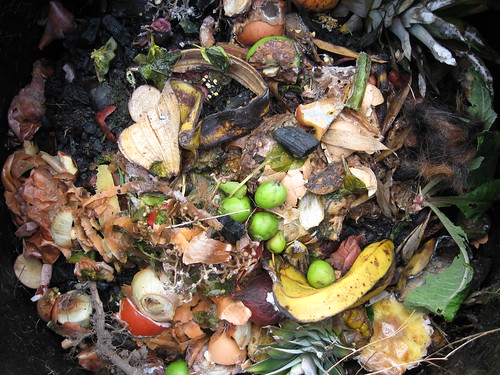
      A study found that a hen can consume about 7 pounds of food scraps a month, or about 84 pounds a year.

      "If a city had 2,000 households with three hens or more each, that translates to 252 tons of biomass that's diverted from landfills," [Andy "the Chicken Whisperer"] Schneider said. "They are really good compost-ers."
      I'm surprised more cities and towns aren't taking this into consideration when debating whether to legalize urban chickens.

      Think of the cost-savings in reduced traffic to and from (and within) the local landfill if more folks had their own backyard egg-producing, insect-eating, weed-eating scrap composters!

      I know our girls loved grapes and blueberries and lightly wilted greens as treats. What have you been surprised to find your urban chickens will eat?

      Photo credit: Watt Dabney on Flickr

      Wednesday, February 17, 2010

      Do urban chickens attract urban rats?

      Ewww, what's up with all these @#$! rats?

      The sudden arrival of rodents in the neighborhood is an issue no one particularly likes. And when they do arrive (or simply come out of hiding), folks are quick to try and find someone or something to blame.

      Enter urban chickens to take the blame.

      I fear some urban chicken proponents might be too quick to state that urban chickens are NOT the reason rats show up in a neighborhood.

      Let's look at the rat facts as related by Judy Haley in her ChronicleHerald.ca article, "Urban chickens bring urban rats":
      1. rats flock to food sources; 
      2. they remain close to the food source and breed; 
      3. rats are attracted to bird seed and chicken feed; 
      4. if rats were already present, they multiply once a new food source is introduced; and 
      5. areas of clutter also provide nesting spots for rats.
      I won't argue with any of the above facts (I had a pet rat in college and can see each of these as true). Moreover, I can see where irresponsible storage of food or upkeep of one's yard could contribute to many of the attractions for rats.

      However, to link the appearance of urban rats solely on the keeping of chickens in an urban setting seems to be using a bit too broad a brush to paint the blame. There are many food sources, not the least of which is improper keeping of trash in between pickups, leaving kibble in a bowl for "outdoor cats" or yard-kept dogs, seeds and pellets in a bird feeder, etc.

      Responsible urban chicken farmers know to keep a clean coop, to only put as much feed as necessary out for the chooks while storing the rest in an air- and water-tight container, and disposing of any coop clutter (poop, nesting material, etc) quickly and thoroughly.

      So, yes, the opportunity is there for irresponsible urban chicken keeping to attract rats, but common sense (which unfortunately seems in short supply in some places) should help keep rats from becoming a problem.

      Have you noticed rats around your hen house? How have you taken care of the problem?

      UPDATE (2/22): Following a discussion on rats on a listserv, I found this great resource from UC IPM on how to "manage" rats: Rat Management Guidelines.

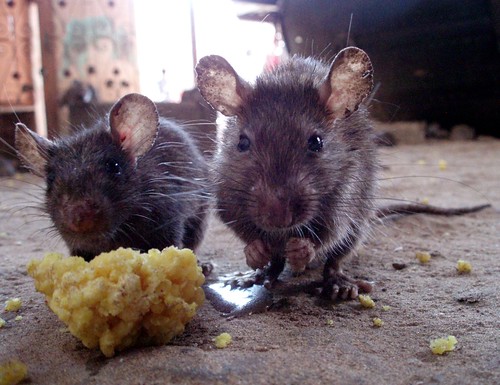
      Photo Credit: Matthieu A. on Flickr

      Tuesday, February 9, 2010

      Urban Chickens Strengthen a Community (video)

      (note: updated the embedded video to point to vimeo version on 3/3/10)

      Lisa Schneider's created a nice mini-documentary showing just what happens to her El Cerrito neighborhood with the introduction of backyard chickens.

      Are we bowling alone? Think again! Schneider shows how the act of owning urban chickens helps weave connections within and across a neighborhood. She shows that they're not just one person's chickens, they're the community's chickens.

      Chickens Create Community on Elm Street from Linda Schneider on Vimeo.


      In interview after interview you can see a social community has been created resulting in greater emotional and social support for everyone involved.

      I found I could recognize many of the same reactions that Schneider's neighbors had mirrored those of my own neighbors. Have you seen the same thing happen when people discover you own urban chickens?

      LinkWithin

      Related Posts with Thumbnails